Why the Next Wave of Surgical Robotics M&A in 2026 Will Look Different

Tracking the current surgical robotics M&A cycle against thirty years of medtech deal history, surgical robotics M&A in 2026 is not a new phenomenon. It is the repeat of a specific pattern that started with US Surgical in the 1990s and hit its inflection point with Intuitive Surgical in the 2000s.
The strategics understand the moat that surgical robotics platforms produce, and they are buying, building, or defending against that moat with capital allocation that dwarfs anything the sector saw a decade ago.
Great companies don't wait for markets to form.
They engineer them.
The surgical robotics M&A cycle is the ultimate consequence of that engineering compounding across two decades, and the founders and investors who understand the pattern are positioning against the moves the strategics will make next.
Over 400+ episodes of State of MedTech, the M&A patterns behind surgical robotics have been the single most consistent macro story on the show.
Every episode about a $1B+ medtech deal circles back to the same underlying dynamics. This piece walks through five that are shaping how the 2026 surgical robotics M&A cycle plays out.
Takeaways
- Surgical robotics M&A is accelerating in 2026 because the strategics have watched what Intuitive built and want the same moat. Medtronic's Hugo, J&J's Ottava, and Abbott's category expansion all trace back to this playbook.
- US Surgical's history is the pattern behind modern medtech M&A strategy. Tyco bought US Surgical for $3.3 billion, Medtronic bought Covidien for $42.9 billion, and the product lineage lives on today inside the biggest surgical robotics platforms.
- Boston Scientific and Intuitive Surgical show the market cap gap that surgical robotics creates. Intuitive at $24 billion versus Boston Scientific at $149.7 billion, but Intuitive keeps beating the street because the surgical robotics platform is defensible.
- Buy-it-and-kill-it is a real medtech M&A pattern. Intuitive absorbed Computer Motion, shut it down, and used the intellectual property as a twenty-year moat.
- Fred Moll's serial founder playbook is the founder-side analog. Multiple robotics companies, multiple large acquisitions, over $100 million of personal capital across fifteen startups. The market is engineered from both sides.
How US Surgical Became the Playbook Every Strategic Is Now Running
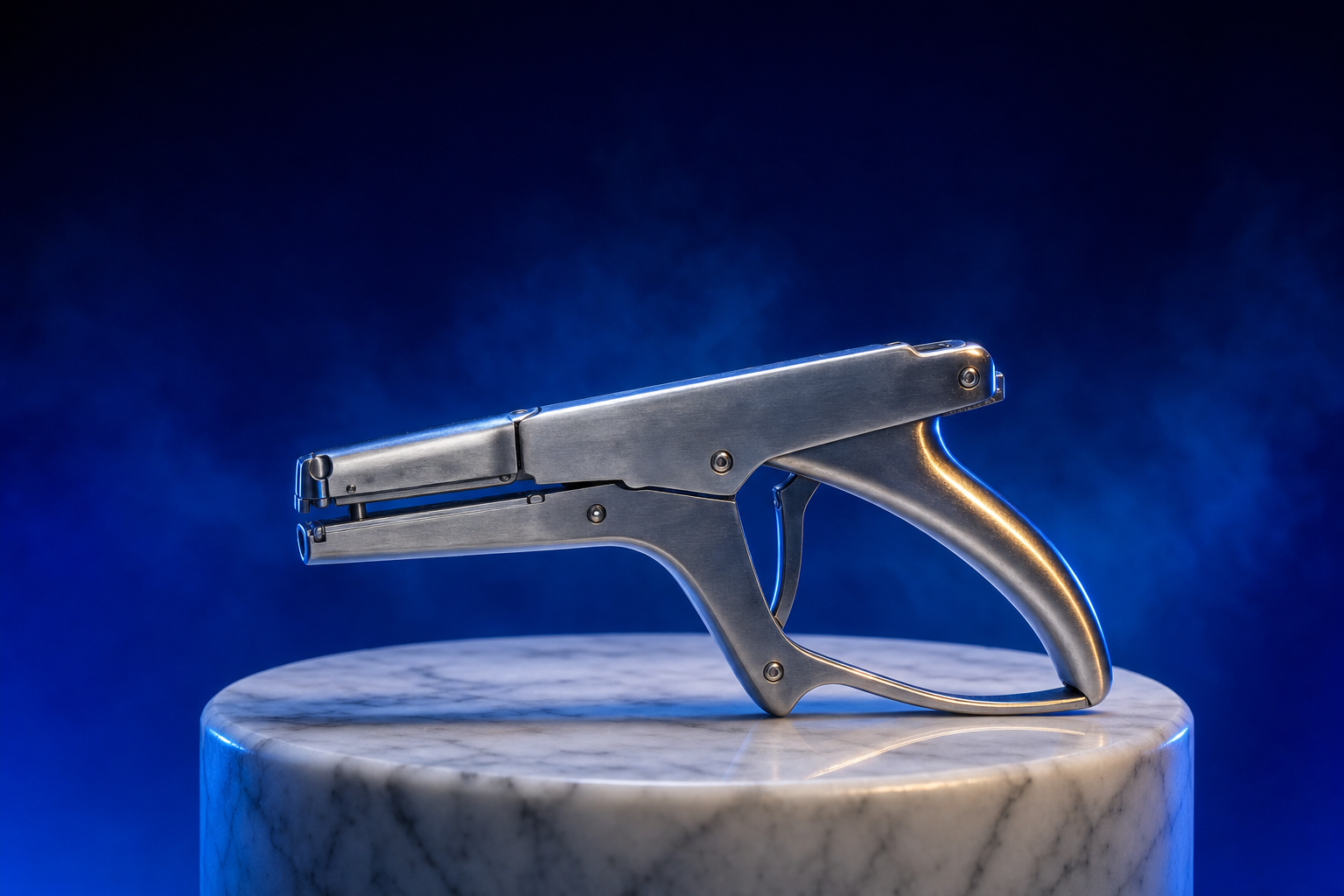
That history is the subject of an episode about US Surgical's founding history and how Leon Hirsch built the company:
"Tyco bought US Surgical for $3.3 billion. Medtronic bought Covidien for 42.9 billion in 2014 where most of the products had come from US Surgical and they live on today. Now Medtronic is entering Surgical Robotics with Hugo to protect that business. J&J is doing the same thing with Ottava."
That is the M&A pattern in one paragraph.
US Surgical was the platform that produced the surgical stapling category.
Tyco acquired it for $3.3 billion. Medtronic acquired Covidien (which had absorbed the US Surgical platform) for what became a $42.9 billion transaction, and the product lineage lives on inside Medtronic's Medical Surgical segment today.
Now Medtronic is entering surgical robotics with the Hugo platform, and J&J is entering with Ottava. Both moves are defensive extensions of businesses that trace back to US Surgical, and both moves are responses to the moat Intuitive built.
The M&A pattern is not new. It is the same pattern rerunning at a larger scale because the strategics have watched what happened over the last thirty years and are trying to be on the right side of the next cycle.
That is the market engineering read on surgical robotics M&A in 2026. The strategics have priced the historical pattern. They are moving now to defend or capture the platform position the next twenty years of surgical robotics will produce.
Why Intuitive Beats the Street Even at a Fraction of Boston Scientific's Market Cap

This number came up in an episode about $21B in deals, heart tech AI, and November's medtech revolution:
"Boston Scientific's market cap is essentially at $149.7 billion while Intuitive is at $24 billion. So well over a $50 billion difference in market cap and TU was still able to beat the street. Medtronic's surgical med surge business is struggling without the surgical robotics platform footprint that Intuitive has."
That gap tells the story of the platform moat surgical robotics produces.
Boston Scientific is a great company with a diverse portfolio spanning cardiology, urology, and endoscopy. Intuitive Surgical is one platform.
Yet Intuitive keeps beating street expectations quarter after quarter because the platform produces predictable, compounding revenue on every procedure ever run on a da Vinci system, and Boston Scientific has to defend against category-by-category competitive pressure across a wider surface.
Stryker's own platform bet, the Mako Surgical acquisition, ran the identical logic: buy the robotics moat instead of building one from inside a diversified portfolio.
That is the medtech M&A strategy signal for 2026. The valuation multiple attached to platform moats is materially higher than the multiple attached to diversified portfolios. So the strategics are moving aggressively to build or buy the platform position before the multiple gap widens further.
Medtronic's Hugo is that move. J&J's Ottava is that move. Every strategic capital allocation decision inside surgical robotics right now is being priced against what Intuitive produced. That is why surgical robotics M&A activity accelerated through 2025 and into 2026.
Buy It, Kill It, Moat It for Twenty Years

Joe DeVivo laid this out in an episode about the US Surgical playbook:
"When Intuitive Computer Motion, they just shut the whole thing down. It was buy it, kill it, and then you know they'd have all the intellectual property that would create basically a moat for the next 20 years."
Read that as the historical precedent for what strategic acquirers will do inside the current surgical robotics cycle.
Intuitive acquired Computer Motion, its primary competitor in surgical robotics, and shut the competing platform down. The intellectual property produced a moat that protected Intuitive's platform position for two decades.
That transaction was not about product integration. It was about eliminating a competitor and consolidating the intellectual property surface for the category.
The strategics buying inside surgical robotics M&A in 2026 are pricing that possibility. Some acquisitions will produce integrated products. Others will produce shutdowns that consolidate intellectual property and eliminate competitive threats.
Both outcomes serve the same market engineering purpose, and founders raising Series A or Series B inside surgical robotics right now should understand which of the two their prospective acquirer is pricing.
Clinical validation ≠ commercial traction, and neither is a guarantee against a buy-and-shut-down. That is the traction gap in surgical robotics M&A form. A cleared platform without independent commercial traction can be acquired specifically to be neutralized.
FDA clearance is the starting line, not the finish line.
The teams that protect against that outcome do so by building enough independent commercial momentum before the acquisition conversation opens that the strategic can't cheaply eliminate the platform without absorbing the market position.
Abbott's $21B Exact Sciences Deal and What It Tells Us About Cycle Momentum

The same episode gets into the Abbott side of it too, in another $21B in deals segment:
"Abbott's $21 billion acquisition of Exact Sciences. So it's a top 10 MEDTECH deal of all time. I think the number one was Medtronic buying Covidien at like 42.9 billion. 2025 M&A activity now surpassing last year's total and tuckins dominating the landscape."
That data point tells the cycle story.
Top ten all-time medtech M&A deals are landing inside the current window. 2025 M&A activity surpassed 2024's total by the year's midpoint, and 2026 is running hotter. The strategics are deploying capital at a scale the sector has not seen in a decade.
The tuck-in pattern is the underrated part.
Every major strategic is running dozens of small acquisitions alongside the headline deals, absorbing specific platform capabilities, physician networks, or clinical evidence packages that reinforce the core position.
Those tuck-ins are where founder market-product fit at the exit layer matters most. A tuck-in acquirer is buying a specific capability, and the founder who engineered that capability into a defensible position gets priced accordingly.
Founders inside surgical robotics M&A right now should be tracking both the headline deals and the tuck-ins. The former sets the multiple. The latter sets the actual acquisition pathway most Series A and Series B founders will experience.
Fred Moll's Serial Founder Playbook Inside Surgical Robotics

Fred Moll's arc comes up later in another US Surgical founding history segment:
"Fred Moll exited Intuitive in about 2002 to start Hansen as well as other robotic companies like Restoration Robotics and then he launched other robotic companies such as Auris, which was acquired for by J&J for $3.4 billion and has since become a major figure in surgical robotics. He's poured well over hundred million of his own money across 15 different startups."
That is the founder-side analog to the strategic M&A pattern.
Fred Moll left Intuitive, started Hansen Medical, started Restoration Robotics, started Auris Health, which J&J acquired for $3.4 billion.
He has invested more than $100 million of his own capital across fifteen startups inside surgical robotics. The founder-side compounding is what produces the acquisition pipeline the strategics eventually price.
Founders inside surgical robotics right now should read the Moll pattern as a category signal. The founders producing multiple platform-scale companies are engineering markets across a career, not a single exit.
Their market narrative on where surgical robotics is going is the market narrative the strategics eventually adopt when they price their own moves.
Ray Cohen ran that exact discipline at Axonics, compounding twenty consecutive quarters of outperformance before Boston Scientific ever opened the acquisition conversation.
That is the highest-use version of medtech M&A strategy from the founder side. Build the market position that becomes the reference for the next generation of acquisitions. Great companies don't wait for markets to form, and neither do great founders across multiple cycles.
Why 2026 Is Structurally Different From Earlier M&A Cycles
Every M&A cycle has its own dynamics, and 2026's surgical robotics cycle carries a specific set of features that distinguish it from the 2010s or 2015s waves. Understanding the differences is what lets founders and investors price the current window correctly.
The first structural difference is the platform premium.
Public medtech investors have priced surgical robotics platforms at multiples that materially exceed diversified portfolio multiples. That gap is producing the strategic capital allocation the sector is now watching.
The second is the AI overlay.
Every major strategic is trying to integrate AI-driven surgical assistance, workflow automation, and outcome prediction into the platform. Acquisitions that provide the AI stack alongside the mechanical robotics platform are commanding premiums the pure-hardware acquisitions didn't.
The third is the tuck-in acceleration.
Strategics are running acquisition pipelines that would have taken a decade to execute in the 2010s. The pace of tuck-in deals inside surgical robotics doubled between 2023 and 2025, and 2026 is running hotter still.
The teams reading these three structural features correctly are positioning their companies against the specific capabilities the strategics are pricing hardest. The teams reading them incorrectly are engineering for the last cycle's dynamics and getting priced accordingly.
That is where the market narrative each founder engineers over the eighteen months before the M&A conversation opens either produces a premium multiple or a discount. The strategic acquirer prices the narrative alongside the technology, because the narrative signals how the acquired platform will position inside the strategic's existing portfolio.
What This Means for Medtech Founders and Investors
Surgical robotics M&A in 2026 is running the US Surgical and Intuitive playbook at a larger scale, with more capital, and with more strategic urgency than the sector has seen in a decade.
The strategics are pricing the platform moat.
The founders producing multiple platform companies are engineering the market narrative the strategics eventually adopt. The tuck-in pattern underneath the headline deals is where most Series A and Series B founders will find their acquisition pathway.
This is the same discipline behind how to exit medtech on favorable terms. The market position engineered before the acquisition conversation opens is what determines the multiple.
Every founder inside surgical robotics right now should be reading the current M&A cycle for what it says about where their own exit conversation eventually opens.
So the surgical robotics M&A question isn't which strategic might buy you. It's whether the market narrative you engineered lines up with what the strategic is pricing.
If yes, the acquirer's read of the category is already in your favor. If no, the deal prices on cost minimization instead of platform premium.
That's what we built MarketCraft to solve. It's a market engineering practice that works upstream of the M&A conversation so the founder's market position is what the acquirer prices, not just the technology.
Surgical robotics M&A is a market engineering outcome, and the companies that engineer the market position early price into the cycle at a completely different multiple than the medtech leaders who wait to be found.
Frequently Asked Questions
What Is Driving Surgical Robotics M&A Activity in 2026?
The strategics have watched Intuitive Surgical build a defensible platform moat over twenty years. Medtronic, J&J, and Abbott are moving aggressively to build or buy their own platform positions before the multiple gap widens further. That capital allocation is producing top-ten all-time medtech M&A deals inside the current window.
Why Do Platform Companies Like Intuitive Trade at Premium Multiples?
Platform companies produce predictable, compounding revenue on every procedure. Diversified portfolio companies have to defend against category-by-category competition across a wider surface.
The market prices the difference through valuation multiples that materially favor platforms, which is why Intuitive keeps beating the street even at a fraction of Boston Scientific's market cap.
What Should Series A and Series B Medtech Founders Learn From US Surgical's History?
The historical pattern rerunning at larger scale. US Surgical's platform produced multiple strategic acquisitions over decades. The founders engineering multi-platform careers today are running the same pattern. The strategic buying inside surgical robotics M&A in 2026 is pricing that history.
How Does Buy-It-and-Kill-It Affect Medtech Founders?
Teams that accept a strategic acquisition without independent commercial momentum can end up producing a platform shutdown rather than integrated product.
The protection is building enough real commercial adoption before the acquisition conversation opens that the strategic can't cheaply eliminate the platform. That is what separates companies that exit into ongoing product lines from teams whose companies become intellectual property moats.
What Role Do Tuck-In Acquisitions Play in Surgical Robotics M&A?
Tuck-ins are where most Series A and Series B medtech founders will experience an acquisition. Every major strategic is running dozens of small acquisitions alongside headline deals, absorbing specific platform capabilities, physician networks, or clinical evidence packages.
The market-product fit at the exit layer for those founders is the specific capability the tuck-in acquirer is pricing.
Listen to the Full Conversations
- US Surgical's Founding History: How Leon Hirsch Built the Company
- $21B in Deals, Heart Tech AI, and November's Medtech Revolution
- US Surgical With Joe DeVivo
Subscribe wherever you listen to podcasts.
About the Author
Omar Khateeb is the founder of MarketCraft and host of The State of MedTech, a leading podcast in the medtech industry.
He works with medtech founders and commercial leaders on market engineering, commercialization strategy, and revenue growth. Visit marketcraft.ai or subscribe to The State of MedTech for weekly conversations with the people building the future of medical devices.